
If your gas pool heater is ageing, or your last gas bill made you wince, you’ve probably wondered whether it’s time to switch to a heat pump. It’s one of the most common questions we’re asked, and with gas prices climbing and Sydney councils actively moving away from gas, the timing of the question is no accident.
The honest answer depends on how you use your pool. Here’s a clear comparison of a gas pool heater vs heat pump, so you can decide whether replacing your current system is the right move.
The short answer
For most Sydney pool owners who want to swim regularly and extend their season, a pool heat pump is the better long-term choice. It costs far less to run, suits year-round use, and aligns with where the market is heading. Gas still has a place, mainly for spas and pools that need fast heat on demand a handful of times a year. The rest of this article explains why.
How each system heats your pool
The two systems work in fundamentally different ways, and that difference drives everything else.
Gas pool heaters
A gas heater burns natural gas or LPG to heat water directly as it passes through a combustion chamber. Its main strength is speed. It can lift water temperature over a 24 hour period regardless of the weather, which is why gas remains popular for spas and for pools used only occasionally.
Pool heat pumps
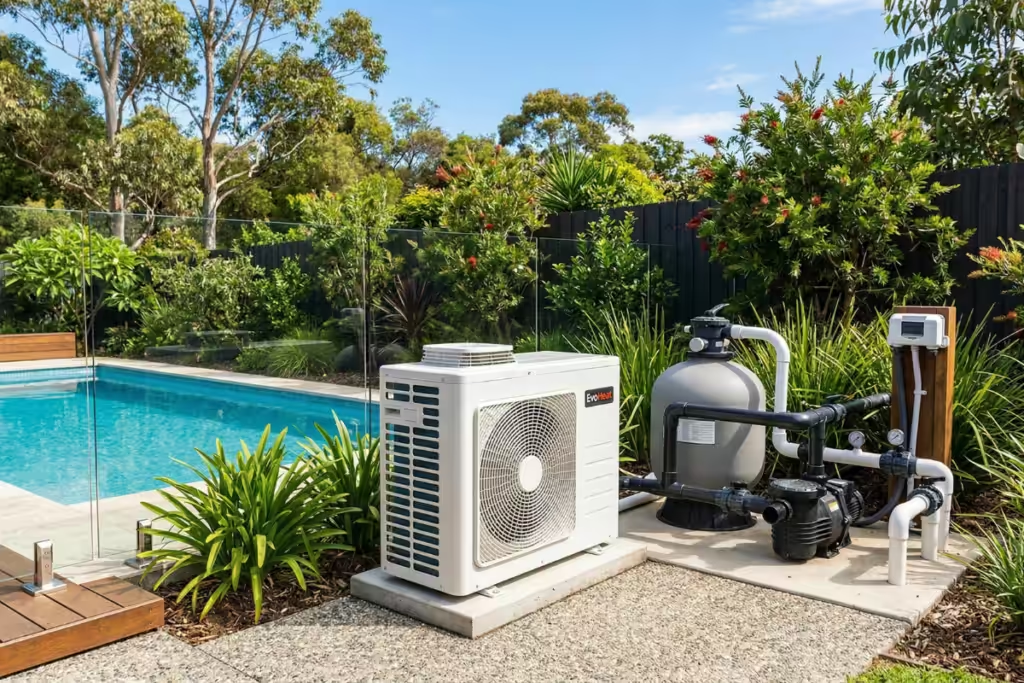
A heat pump doesn’t create heat, it moves it. It draws warmth from the surrounding air and transfers it into your pool water. Because it’s shifting existing heat rather than generating it, it uses a fraction of the energy. The Australian Government’s Your Home guide notes that heat pumps can be very efficient for exactly this reason: for every unit of electricity used, a heat pump can deliver several units of heat.
Gas pool heater vs heat pump: running costs
This is where the gap is widest. Gas is generally the most expensive pool heating method to run, while a heat pump uses considerably less energy to maintain the same temperature. For a pool heated regularly through the season, that difference compounds into a substantial saving year after year.
Rising gas prices only widen the gap. As more households electrify, energy bodies have warned that the network costs of the gas grid get spread across a shrinking pool of customers, which tends to push standing charges up for those who remain connected. In other words, the running-cost case for gas is likely to get weaker, not stronger.
Actual figures depend on your pool size, target temperature and how often you heat, so the sensible step is a tailored estimate rather than a rule of thumb. We can outline expected monthly running costs for your specific pool as part of a quote.
Gas pool heater vs heat pump: speed and climate
Gas wins on raw speed. It heats on demand and isn’t affected by air temperature, so it can bring a cold pool or spa up to temperature in a hurry.
A heat pump heats more gradually, and its performance is tied to the air temperature, because that’s its heat source. On a cold morning there’s less warmth in the air to move, so it works more slowly. For a pool that’s heated continuously through the season, this rarely matters, as the unit simply maintains temperature. For someone who wants to heat a spa from the cold in an hour, it matters more.
This is also where a pool cover changes the maths. An uncovered pool loses most of its heat overnight through evaporation, and the Australian Government estimates a cover can cut heat loss from a heated pool by as much as 75%. A heat pump paired with a cover is a genuinely efficient setup. We’ve explained this in more detail in our guide on whether you really need a pool cover with a heat pump.
What’s changing in Sydney: the shift away from gas
This is the part that makes the timing relevant. The City of Sydney has restricted indoor gas appliances in new residential developments from January 2026, and it’s not alone. Several other NSW councils have introduced similar planning controls, and North Sydney Council’s electrification requirements for new residential developments come into force on 1 July 2026.
To be clear, these rules apply to new builds, not existing homes, so no one is being forced to rip out a working gas heater. But the direction is unmistakable. Gas is being designed out of new Sydney homes, electric alternatives such as heat pumps are being designed in, and that shapes running costs, resale appeal and long-term supply. If you’re replacing a heater anyway, it’s worth choosing the system the market is moving towards rather than away from.
When a heat pump is the right replacement
A pool heat pump is likely the better choice if you:
- Swim regularly and want to extend your season through the cooler months
- Want the lowest practical running cost over the life of the system
- Are happy to use a pool cover to maximise efficiency
- Have, or can add, the electrical capacity to support the unit
- Want a system that suits where NSW energy policy is heading
When gas might still make sense
We’d rather give you the full picture than push a single answer. Gas can still be the right call if you:
- Heat a spa that needs to reach a high temperature quickly
- Use your pool only occasionally and want rapid, on-demand heat
- Don’t have the electrical infrastructure for a heat pump, and adding it isn’t practical
For many households, the best setup is actually a heat pump for everyday swimming, sometimes paired with solar, reserving gas only where fast on-demand heat is genuinely needed.
Making the switch
Replacing a gas heater with a heat pump is straightforward with the right team, but a few things matter for a good result. The unit needs to be correctly sized to your pool, the electrical supply needs to be suitable, and placement affects both performance and noise. Getting these right is the difference between a system that quietly does its job and one that struggles.
You can read more about the pool heat pumps we supply and install, including leading brands such as Rheem and Madimack, or about our pool heater installation process.
Talk to Sydney’s pool heat pump specialists
Whether a heat pump is the right replacement really does come down to your pool and how you use it. Our team services Greater Sydney and the Blue Mountains, and we’re happy to assess your setup honestly, including telling you if your existing gas heater is worth keeping.
Call us today or request a callback for a no-obligation quote, and we’ll walk you through the options for your pool.