
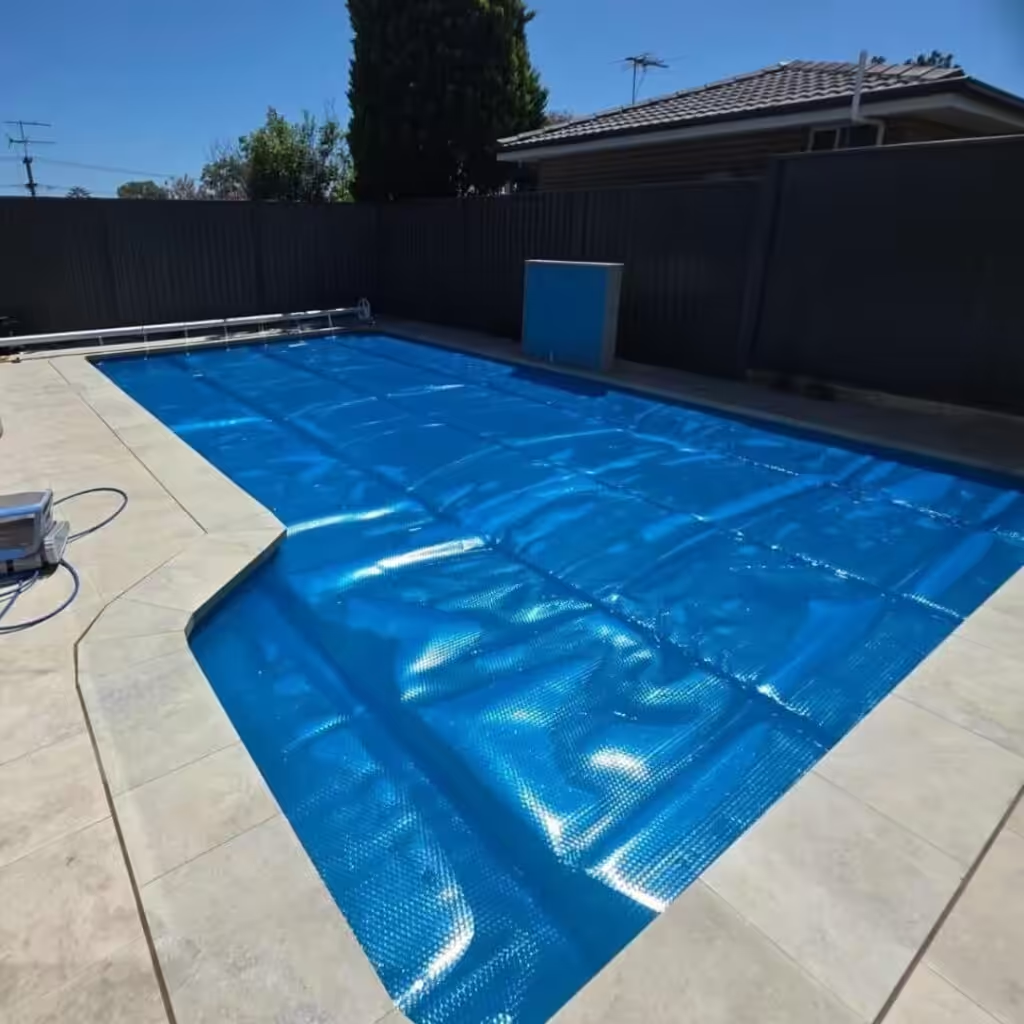
You’ve invested in a high quality pool heat pump, your water is warm, and your pool is ready to use well beyond the traditional summer window. But if you’re running your heat pump without a pool cover, you may be spending far more than you need to. A pool cover is one of the most cost-effective additions a pool owner can make, and when combined with a heat pump, the two work together to deliver a noticeably warmer pool at a fraction of the running cost.
Where Your Heat Really Goes Without a Cover
To understand why a pool cover matters, it helps to know how heat escapes from an uncovered pool. The biggest culprit is evaporation. The warmer your pool, the faster it loses heat to the surrounding air, which means your heat pump has to work harder just to maintain temperature. To be more technical, when warm water molecules on the surface of your pool gain enough energy to convert to vapour, they carry that heat with them and it’s gone. Wind accelerates this process significantly, as do low humidity and high water temperatures.
This is especially relevant in the Sydney and Western Sydney climate, where warm, dry afternoons and evening breezes are common throughout much of the year. An uncovered pool in these conditions can drop several degrees overnight, requiring your heat pump to run for extended periods each morning just to bring the water back to your preferred temperature.
The Power of a Pool Cover: What It Actually Does
A pool cover acts as a physical barrier between the water surface and the air. By blocking direct exposure to wind and air, it drastically slows the rate of evaporation. Using a pool cover with a Rheem pool heater is considered essential for maximum efficiency, as it can reduce heating costs by up to 50–70%. Without a cover, up to 70–75% of a heated pool’s energy escapes through surface evaporation.. The cover traps the warmth the heat pump has already generated in the water, meaning the unit runs for less time to reach and maintain your target temperature.
Beyond heat retention, a pool cover also conserves water. Research indicates that a standard-sized pool can save up to 50,000 litres of water per year with a cover in place, while also cutting chemical usage by up to 50%. For any pool owner looking to reduce ongoing costs, these are meaningful numbers.
How the Heat Pump and Cover Work Together
Think of your heat pump and pool cover as a team. The heat pump does the work of heating the water; the pool cover holds that heat in place. Without the cover, your heat pump is effectively fighting against constant heat loss. With a cover, the system becomes significantly more efficient.
This also has practical implications for the size of heat pump you need. A smaller, more efficient unit may be all that’s required when a pool cover is in regular use. At Relevant Air & Water, our technicians factor in pool cover usage when recommending heat pump sizes for Sydney homes. Customers who commit to using a cover consistently often find they can get away with a smaller unit, which means lower purchase and running costs over the life of the system. You can find out more about heat pump sizing and pricing on our pool heat pump prices and installation page.
Choosing the Right Pool Cover for your Pool
Not all pool covers are equal. The main types available to Australian homeowners are:
Solar or bubble covers are the most common choice for residential pools. They consist of a bubble-wrap-style material that captures solar heat during the day and transfers it into the water, while also acting as an evaporation barrier overnight and when the pool is not in use.
Thermal covers use denser insulating material to focus purely on heat retention rather than solar gain. These are particularly effective in cooler months or for pools that get limited direct sunlight.
Automatic covers are motorised and roll on and off with the push of a button, making them far more likely to actually be used consistently. Their higher upfront cost is often justified by the convenience they provide.
The most effective cover is simply the one you will use every time the pool is not in active use. A cover sitting rolled up beside the pool saves nothing.
The Bottom Line on Running Costs
Many pool owners are surprised to learn just how much of their heating bill is driven by evaporation. The more often you cover your pool when it is not in use, the harder your heat pump can work on heating rather than simply replacing lost heat. Combined with setting the heat pump to run during daylight hours (particularly if you have solar panels), a pool cover can dramatically reduce your monthly electricity costs.
If you’re unsure whether your current setup is as efficient as it could be, or you’re looking at adding a heat pump to your Sydney home, the team at Relevant Air & Water is happy to walk you through your options. With over 25 years of experience servicing pools across Sydney and Western Sydney, we can recommend the right combination of heat pump size and cover type to suit your pool, your budget, and how you actually use your pool.
Get in touch today for an obligation-free quote.