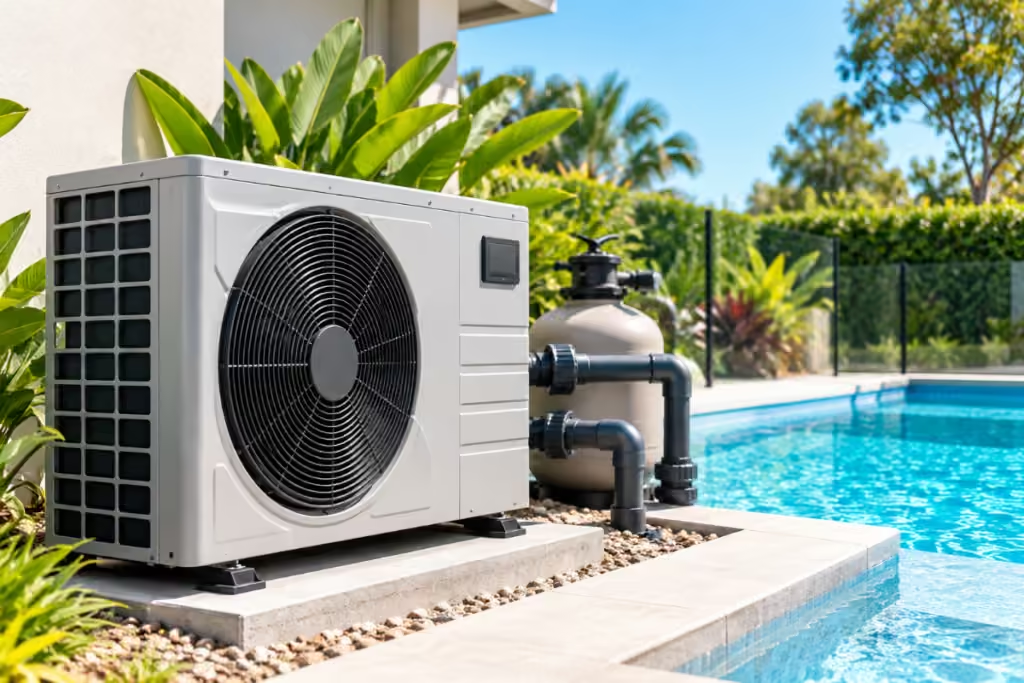
A pool heat pump is already one of the cheapest ways to warm a pool. Instead of burning fuel to create heat, it takes warmth out of the air around it and moves that warmth into your water. But how cheaply it runs in your backyard depends a lot on how you set it up and use it. The very same unit can cost you more or less, depending on a few simple choices.
With the warmer months here and heaters switching back on for the season, now is a good time to get this right. Below are eight simple ways to improve your pool heat pump efficiency and keep your power bill down, without giving up a comfortable swim.
Why pool heat pump efficiency matters
A heat pump’s big advantage is that it moves heat that already exists in the air rather than making heat from scratch. As the Australian Government’s Your Home guide explains, that is why heat pumps use far less power than gas. In simple terms, a small amount of electricity gets you a large amount of heat.
While pool heat pumps are designed to operate efficiently, their performance and running costs depend on several factors. Heat loss from your pool, your preferred water temperature, airflow around the unit, operating schedules and regular maintenance all play an important role. By making a few simple adjustments, you can improve your heat pump’s efficiency, reduce unnecessary energy consumption and enjoy a comfortably heated pool throughout the swimming season.
1. Use a pool cover (the biggest win by far)
If there’s one simple way to keep your pool warmer and your running costs down, it’s investing in a good-quality pool blanket. Without one, your pool can lose a surprising amount of heat, particularly overnight when temperatures drop. This means your heat pump has to work harder the next day to bring the water back up to your preferred temperature.
A pool blanket helps keep that warmth where it belongs, in your pool! It also reduces evaporation and keeps leaves and debris out of the water. Less heat loss means less work for your heat pump and potentially lower electricity bills.
Want to know more? Check out our guide on whether you really need a pool cover with a heat pump.
Our advice? If you’re heating your pool, a pool blanket is one of the smartest investments you can make to get the most out of your heat pump.
2. Set a sensible temperature and don’t overheat
Every extra degree you heat the water uses more power. Heating to 30°C costs noticeably more than heating to 28°C, even though the water only feels a little warmer.
Pick a temperature that is comfortable and leave it there. For most families, around 27°C to 28°C is plenty. Try not to nudge it higher “just in case”.
3. Keep the water moving
A heat pump can only warm water that is flowing through it. If your pool pump is not running while the heater is on, or the two are set to different times, the heater cannot do its job properly and may keep stopping and starting.
A few easy checks help:
- Make sure the pool pump runs while the heater is on
- Keep the baskets and filter clean, because a blocked system makes everything work harder
- Clear leaves and rubbish away from the inlets
The Australian Government also suggests running your pool pump at the lowest speed needed, and only for as long as the water needs, to keep it clean and safe. That cuts the power the whole setup uses.
4. Run it during the warmer part of the day
A heat pump pulls warmth from the air around it, so it works best when the air is warmest. Running it through the middle of the day, rather than overnight when the air is cold, means it collects heat more easily and works less for the same result.
This also suits solar panels nicely. If you have them, heating during daylight lets you run the unit on your own power rather than paying for power from the grid.
5. Give the unit room to breathe
Where you install your pool heat pump makes a big difference to how well it runs.
Every manufacturer has specific installation requirements, including how much space needs to be left around the unit for proper airflow. If your heat pump doesn’t have enough room to breathe, it can struggle to heat your pool efficiently and may end up costing you more to run.
Because the air around the unit is where it gets its heat, airflow matters a lot. A heat pump that is closed in by fencing, shrubs or a tight corner ends up blowing out cold air and then breathing it straight back in, which makes it work harder for less.
Our advice? Always check and follow the manufacturer’s recommended clearances before installing your heat pump. Getting the installation right from the start helps your unit run smoothly, efficiently and perform at its best.
6. Make sure it is the right size
A unit that is too small runs flat out and still struggles to reach temperature, which wastes power and wears it out faster.. The right size for your pool, your area and the way you swim is what gives you warm water at a sensible cost.
If you are putting in a new system, this is worth getting right from the start. You can read about the pool heat pumps we supply and install, including choosing the right size for your pool.
7. Have it serviced regularly
Efficiency slips quietly over time. A dusty unit, a slightly low gas level (the gas it uses to move heat), or a worn part will all make it work harder long before it actually breaks down, and you pay for that in every heating session.
We suggest a service once a year for home pools, and every three months for busy commercial pools such as swim schools and gyms, where the units work much harder. A service keeps the unit running as well as it should and catches small problems before they turn into big ones. If yours is not performing the way it used to, our team handles pool heat pump servicing and repairs across Sydney.
8. It all adds up together
The best results come from doing several of these things, not just one. A cover, a sensible temperature, clean and well-timed filtering, good airflow and the right sized unit each save a little on their own, and together they make a real difference to your seasonal bill.
Small habits help too, and they are free. Dropping the temperature by a degree, covering the pool each evening, and not heating from cold more often than you need to will all trim your costs.
Get more swim for less
Your pool heat pump is cheap to run by design, but the way you set it up and use it decides what you actually pay. A cover, a sensible temperature, clean and well-timed water flow, good airflow, the right size and a regular service will keep it working at its best right through the season.
If you would like a hand getting your system running efficiently, or you are thinking about a new pool heat pump, our team looks after Sydney, Western Sydney and the Blue Mountains. Call 0428 216 748 or request a callback, and we will help you get the most comfort for the lowest running cost.